
Connecting Fleet Management to Carbon Accounting
Managing a fleet involves more than keeping vehicles on the road. Rising fuel costs, inefficient routes, vehicle downtime, and driver safety challenges can all affect your bottom line. But what if you could gain better visibility into your fleet’s performance and make decisions based on real operational data?
For companies running delivery routes, field service teams, or commercial haulers, mobile combustion makes up a massive share of Scope 1 emissions. Yet many corporate sustainability teams still calculate fleet emissions using rough fuel receipts and loose mileage estimates. That creates blind spots in ESG disclosures and leaves operations teams out of the decarbonization conversation.
To solve this, Basecheck collaborates with Stratcon, the local distributor for Geotab, to turn actual engine diagnostics and trip data into precise emissions reporting.
Meet Geotab: Smarter Fleet Management Starts with Data
Geotab is a global provider of connected transportation solutions, helping businesses collect and analyze vehicle data through telematics technology and its fleet management platform, MyGeotab.
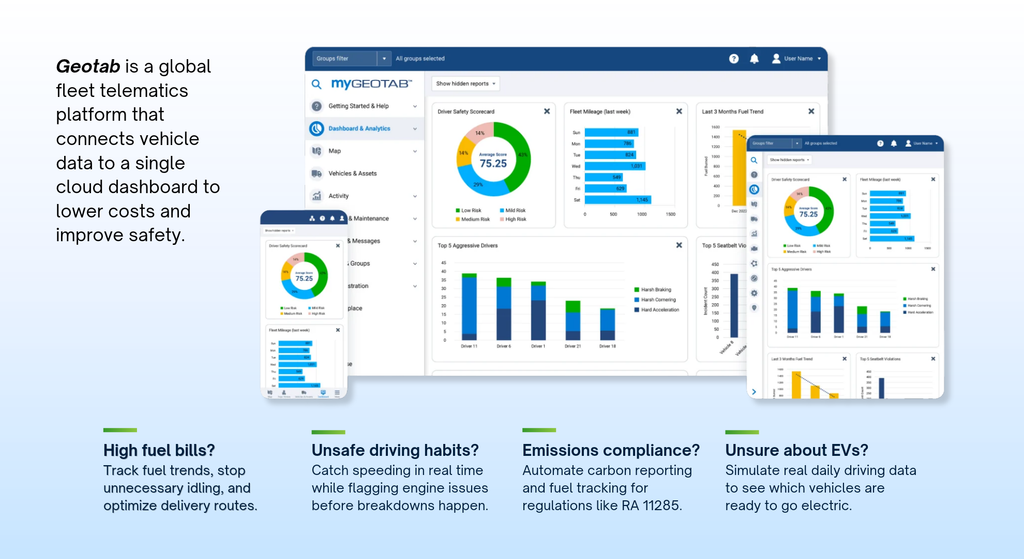
Image via Geotab · Basecheck in partnership with Stratcon
How the Data Pipeline Works
A carbon inventory is only as reliable as the field activity data feeding it. Instead of relying on monthly manual logs, this joint approach pulls telematics directly from the engine:
- Geotab captures vehicle activity on the road: fuel burn, idle time, trip routes, mileage, and engine status.
- Stratcon handles the hardware deployment, device setup, and local operational support for the fleet.
- Basecheck ingests that high-resolution activity data to calculate Scope 1 carbon footprints using recognized international accounting standards (such as the GHG Protocol) and localized emission factors.
Operational Gains That Feed Direct Decarbonization
Cutting emissions does not happen in a spreadsheet; it happens on the road. Stratcon’s rollout of Geotab’s platform (MyGeotab) gives fleet managers the day-to-day controls needed to actively lower emissions before reporting season:
- Eliminate idle waste: Identify excessive stationary engine idling and unnecessary air-conditioning run times that quietly drive up fuel bills and tailpipe emissions.
- Correct inefficient driving: Spot aggressive acceleration, chronic speeding, and harsh braking so drivers can be coached toward smoother, more fuel-efficient habits.
- Catch maintenance faults early: Pull engine diagnostic trouble codes (DTCs) remotely, preventing poorly running engines from wasting fuel and breaking down mid-route.
- Optimize asset utilization: Review route patterns and run times to retire underutilized units and balance wear across the entire vehicle roster.
(Diagnostic depth and telemetry features vary depending on vehicle make, model, and hardware configuration.)
Who This Fits
This integrated approach works for Philippine enterprises with light, medium, or heavy commercial vehicles looking to align fleet operations with corporate climate disclosures:
- Logistics, cold-chain, and distribution operators
- Last-mile delivery and e-commerce courier networks
- Field service, utilities, and multi-branch commercial vehicle pools
- Organizations facing mandatory SEC sustainability reporting or supply-chain Scope 3 client audits
Work With Us
Your fleet generates valuable data every day. The right tools can help turn that data into insights that support better operational decisions.
If you are looking to replace guesswork with verified fuel activity data or want a demo of how telematics feeds into carbon reporting:
- Basecheck (GHG Accounting & Sustainability Reporting): inquiries@basecheckph.com
- Stratcon (Energy Service Company): www.stratcon.ph
Explore Geotab with us and discover how connected fleet management could help your business improve visibility, manage costs, and optimize fleet performance.